
Women Artists and the Land aims to consider the role of women artists who create art with the earth and its elements, often sculpting the landscape directly. Through different media which reflect on the work in film, drawing and sculpture, we aim to demonstrate some powerful and poetic approaches taken by women. The exhibition highlights not just the subtle embodiment in their work but its latent strength, which we believe make women’s contributions to this field unique.
We see examples of works which indeed shift earth or rock with artistic intent, but also have a primary aim to convey underlying messages about light, elements, power, movement, health and decay. Each of the three artists in this exhibition brings a different kind of strength beyond material substance . Sculpture here truly helps us to understand important forces of the land and properties of its materials, but also its emotional power to move us.
An exhibition celebrating Still Becoming: Ten Years of GroundWork Gallery
GroundWork Gallery has been open for ten years and at least half of its exhibitors have been women. They have widened the scope of what is conventionally called land art, bringing especially to sculpture, an innate resourcefulness, combined with an economy of means and often a highly personal experience and relationships. Some materials might be solid, but equally they may be soft, transitory or ephemeral. Artworks can vary in scale, occupying landscapes, or brought within a different mode of experience and shrunk to a modest size. No energy is wasted, no material needlessly exploited. Everything has its place and considered meaning. Intention and interpretation are often considered at the outset.
Fiery content
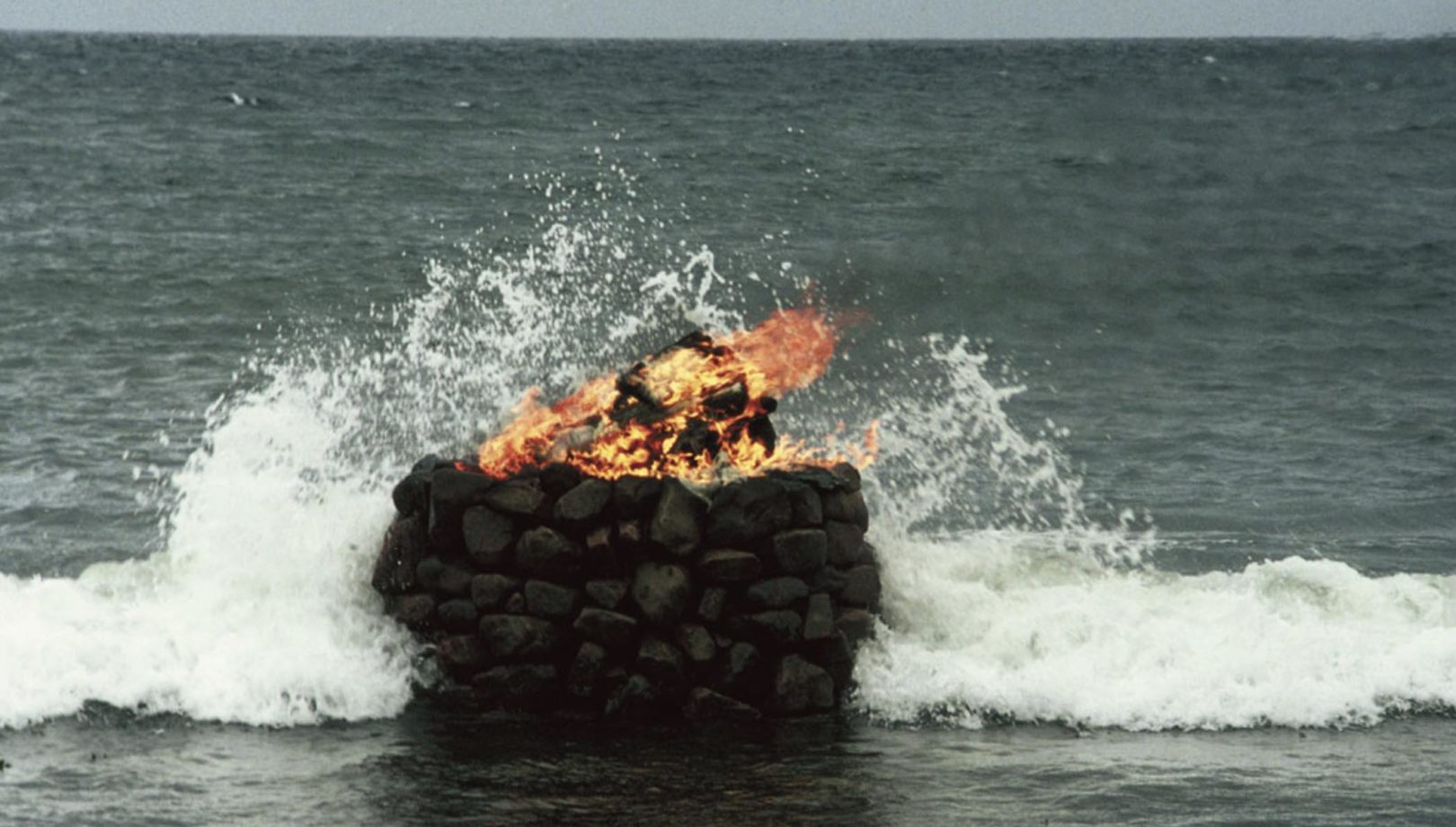
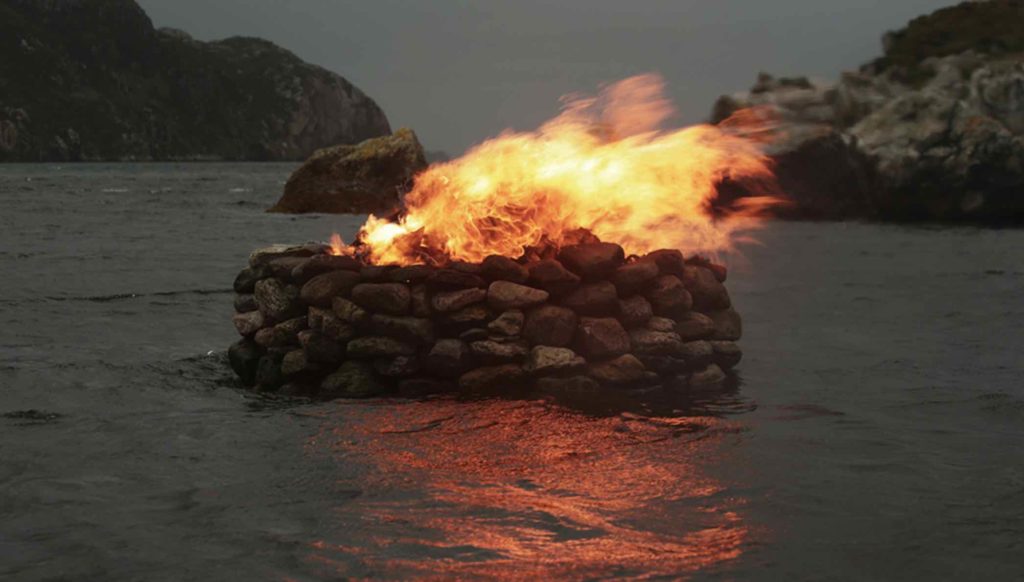
In fact this exhibition contains works that are overtly fiery. Literally so in the case of Julie Brooks’ immensly dramatic Firestacks, and Lotte Scott’s burnt charcoal. But also fired clay is Harriet Hellman’s main medium on show here.
Julie Brook
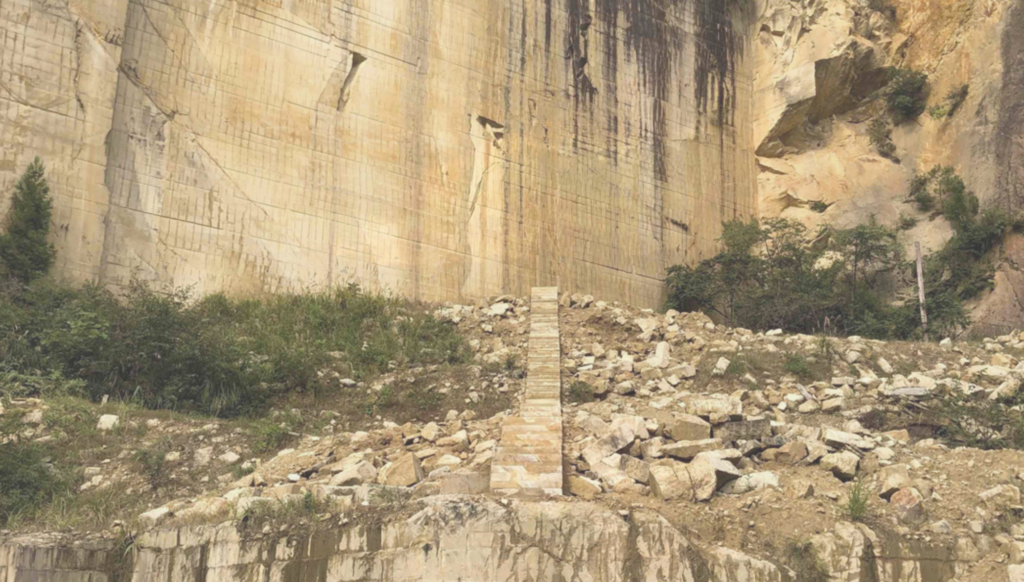
So it is with Julie Brook, our principal exhibitor. She works with the elements – fire, water, earth, air, time, place and architectural-scale forms. She transforms materials in the landscape – stones found in situ – into experiences which are thought-provoking about the earth’s movement and light. Her sculptures might be stone-walled Fire-Stacks burning in the wild seas off Scotland, or vast steps built against a quarry in Japan. Her monumental work ‘Ascending’ there, was then danced on, itself a sculptural activity, bringing it to life in the most delicate and poetic way.
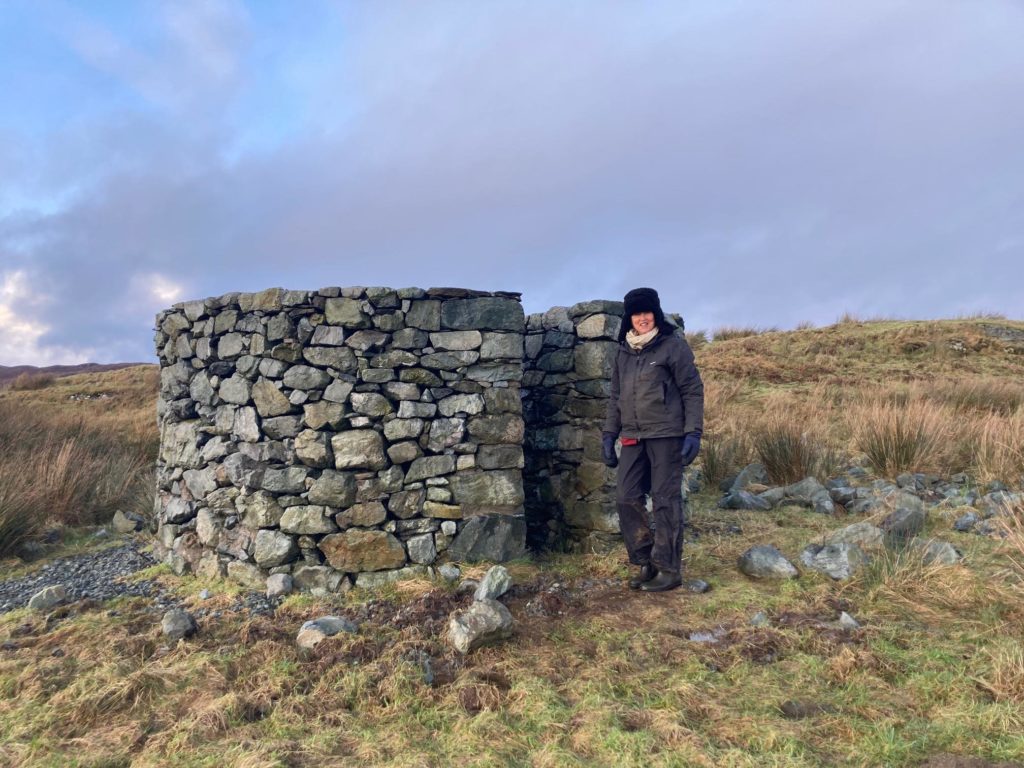
She reshapes land thoughtfully, economically – and often strenuously, in order to show us the earth’s phenomena, which are then reflected on in her drawings and films which bring us these immensely powerful stories in thoroughly absorbing ways.
Lotte Scott
Lotte Scott, is a GroundWork alumna, having shown a series of works in liquified peat, as part of Fragile Nature in 2019. Here, she burns and memorialises ash, as a tribute to devastating ash dieback, which she witnessed in her home county of Somerset.
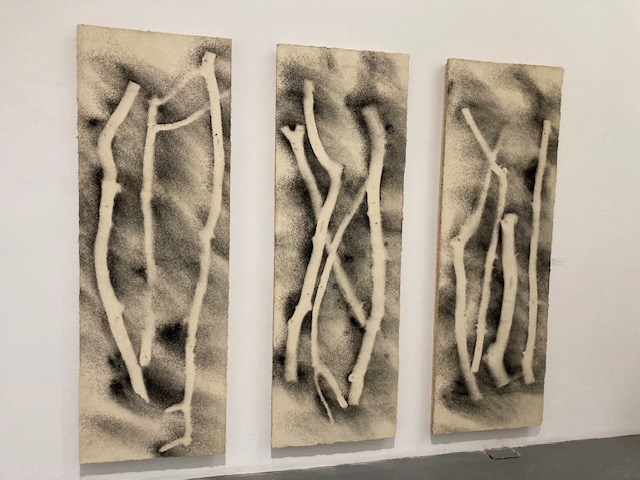
Ash Barrow, commemorates its fragility and mourns the disease, not through brutality, but via care and beauty. She is showing here an installation of charcoal twigs and a triptych of drawings made with and of it as a monumental-scale tribute.
Harriet Hellman
Harriet Hellman, makes sculptural ceramics centred on her concerns with coastal erosion and climate change. Inspired by residencies in the Arctic Circle, Cornwall, Japan, she sculpts ceramic clay in the landscape using the elements to shape its character, firing it to represent the earth of her sites. Geology embeds itself in her visceral forms which retain the tension she has found in the landscapes under threat which inspired and generated them. Harriet Hellman is part of GroundWork NetWork.
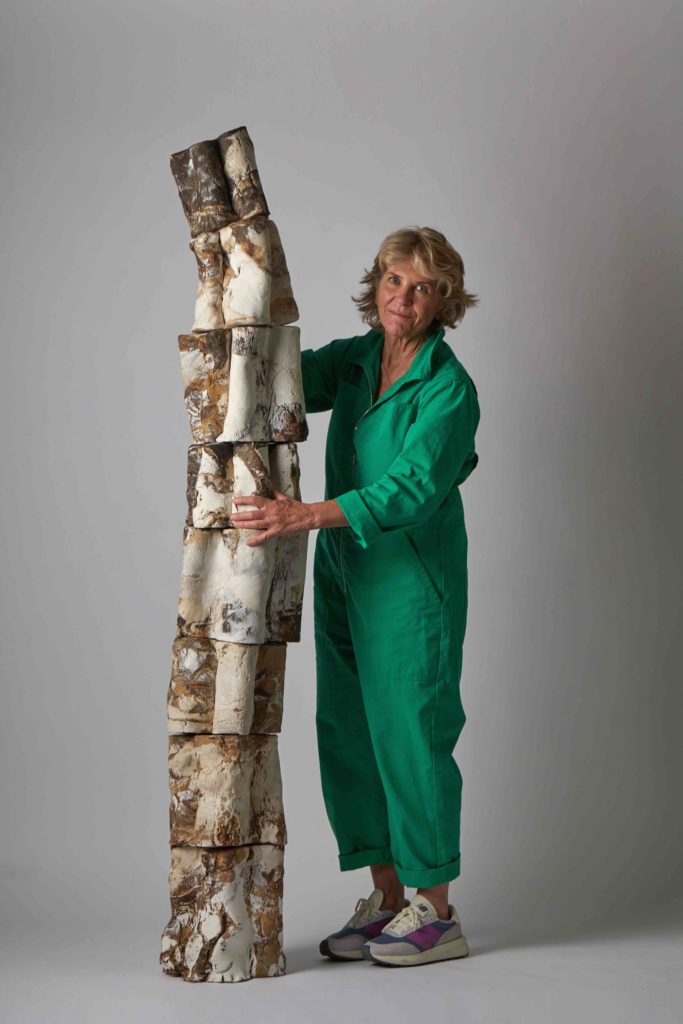
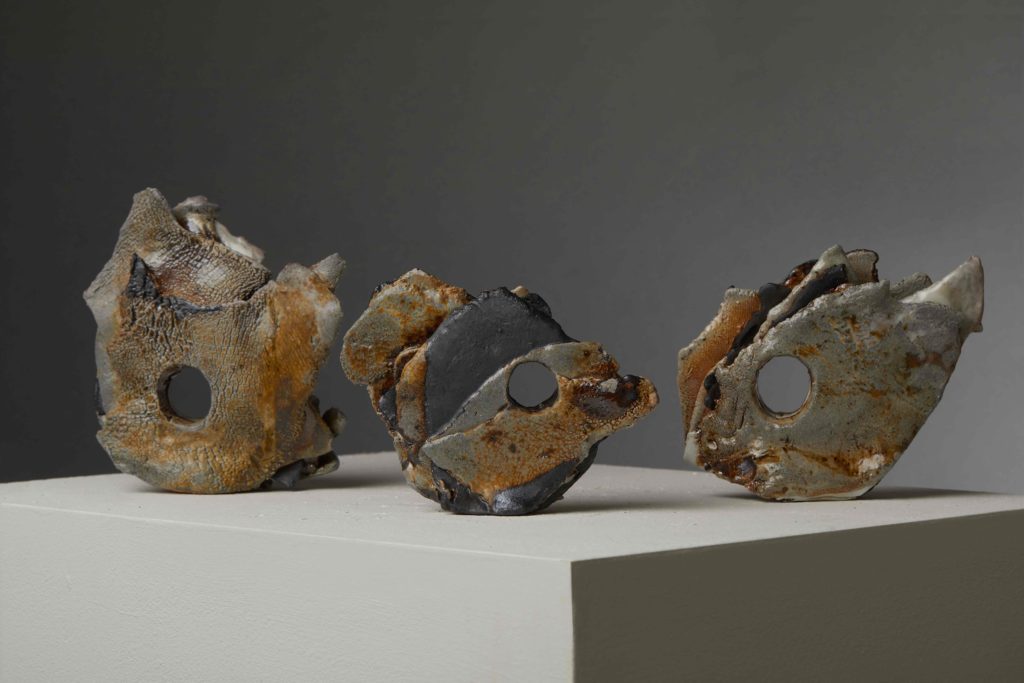
As part of this exhibition she is making a series of columnar structures which she has named ‘Bigger than Me’, as a reference to her experiences travelling in Iceland and he Arctic. There she became quite overwhelmed by the scale of the land, but also by the devastation to it being caused by climate change. Her response eventually, was to make a series of towering structures with surfaces redolent of the craggy landscapes she encountered. Alongside these she is showing miniaturised reflective representations of the former sea defences at Happisburgh in Norfolk. This is a landscape being much changed by the effects of climate and these sea defences have already been removed and the beach and cliffs are regularly being swept aside by an encroaching sea.
This exhibition is intended to continue a discussion, to show ambitious sculpture by women who are working quietly and consistently to engage with deep issues which matter increasingly as our earth suffers. We do not claim that there is a particularly consistent character to women’s art in this field – but we do believe there is a consistent sensitivity of spirit, an awareness of the importance of ritual and emotional power which we intend to acknowledge.
